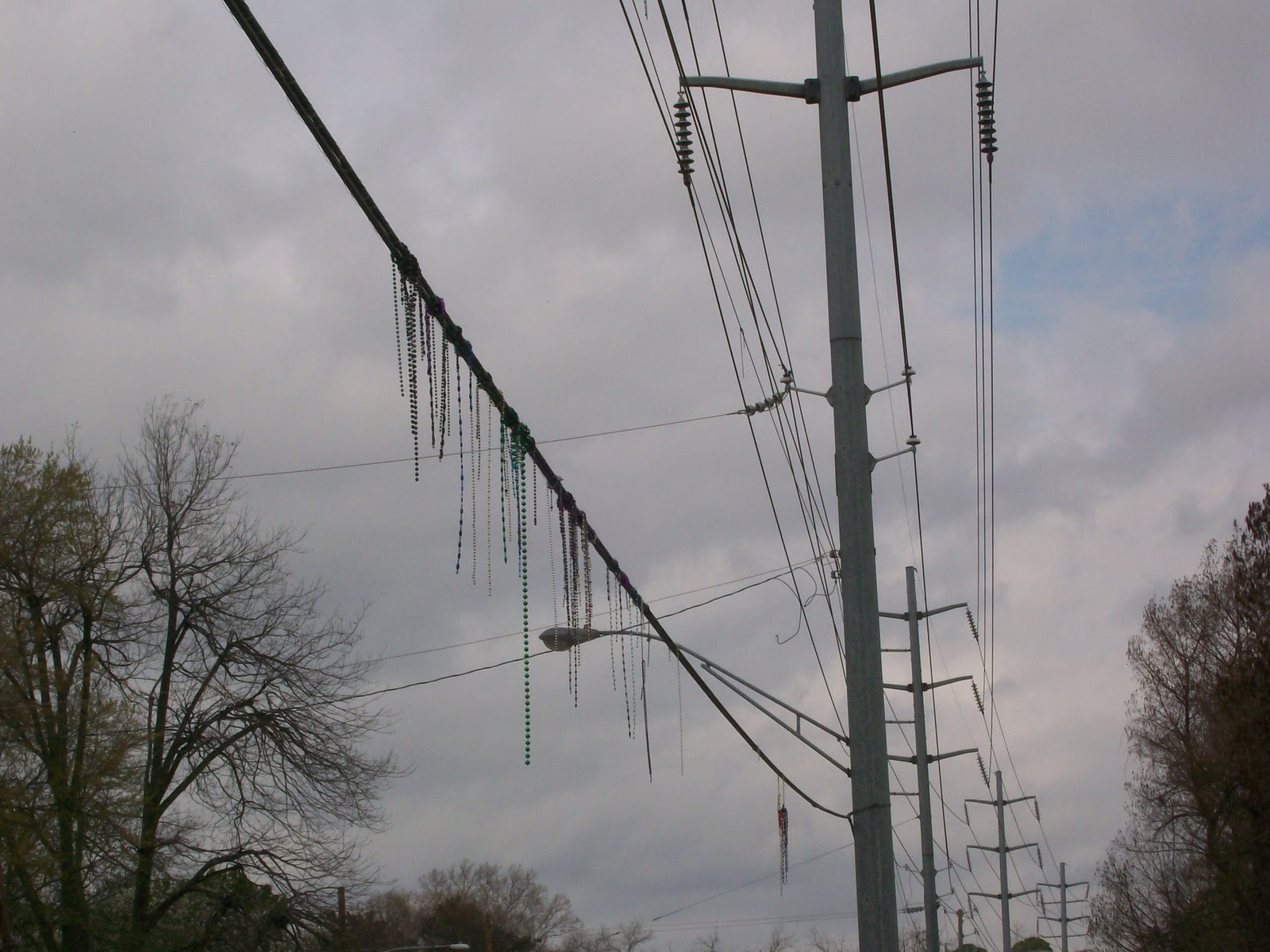
This was formerly over at Ann's Musing on Geology and other things. That blog no longer exists so its been moved here.
WELCOME TO THE KREWE OF ACCRETIONARY WEDGE #32
It's
carnival time in the south and since the Accretionary Wedge is suppose
to be a carnival of blogs and information I feel it is only fitting
that we should have a parade of favorite geologic pictures to post.
I've posted them in the order in which they were received.
Thank you all for participating and making it such a wonderful parade.
@-@-@-@-@-@-@-@-@-@-@-@-@-@-@-@-@-@-@-@-@-@-@-@-@-@-@-@-@-@-@-@-@-@-@-@-@-@-@-@-@-@-@
We will start this parade with some parade music to get into the spirit while you look at the wonderful pictures.
Here's
'76 Trombones Led the Big Parade' from the movie '
The Music Man'
@-@-@-@-@-@-@-@-@-@-@-@-@-@-@-@-@-@-@-@-@-@-@-@-@-@-@-@-@-@-@-@-@-@-@-@-@-@-@-@-@-@-@
First of is Dana with the float from
En Tequila Es Verdad
Dana
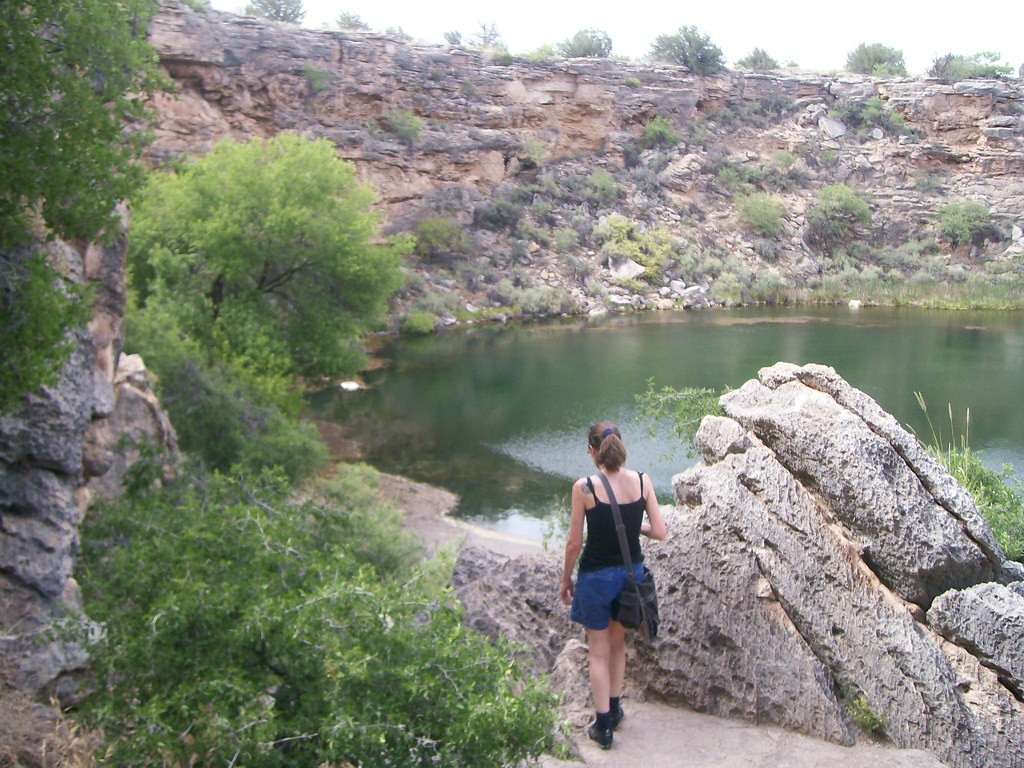
had a hard time picking on a favorite photo, so instead she picked a
favorite geologic place to go to. Can't you imaging yourself going
there for some peace and quiet? Isn't it a fantastic place to visit?
Here's a little of what she wrote: .......
we'll
do this. We'll cut to the chase and play a favorite - a favorite
place, one of my favorite places in the world. We'll take a trek
through the desert and come upon an oasis.
Down around Camp Verde
in Arizona, you'll come across a picture-perfect karst terrain. The
old beds of lake-deposited limestone lay flat, dry and hot under the
sun, carved into gullies and hills by wetter times. In some places,
sinkholes pit the scenery. They're lovely examples of the power of
water and gravity together to sculpt the scenery.
Camp Verde got its name because a river runs through it, causing a line
of green to conga through the hot, scrubby hills. It was enough of a
shock that explorers named it the Verde River, because it was very
nearly the only green thing they'd seen for absolute miles.
You will have to go to her blog to read more about this delightful place.
 |
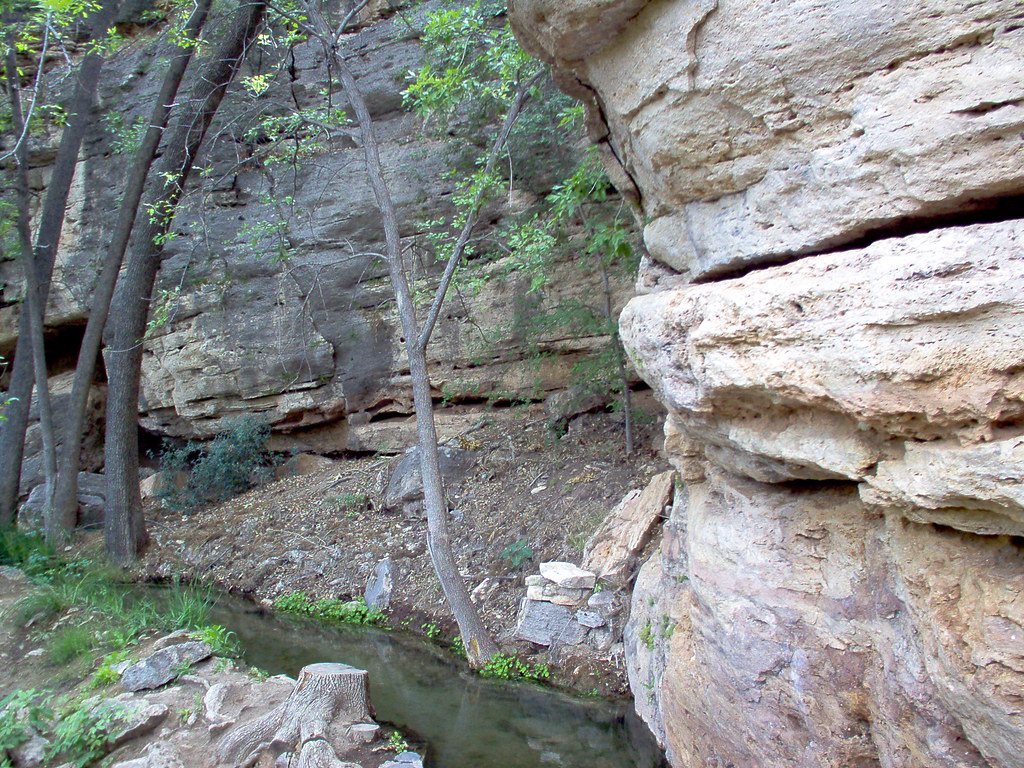
| The old Sinagua canal |
She ended with and I agree:
Now that you've had a nice rest at the water's edge, on with the parade!
@-@-@-@-@-@-@-@-@-@-@-@-@-@-@-@-@-@-@-@-@-@-@-@-@-@-@-@-@-@-@-@-@-@-@-@-@-@-@-@-@-@-@
Jim has two pictured of the fascinating
Gooseneck of the San Juan River for his float at
Well since I have done this for a previous AW, I will switch up the
picture I used and this time give you a couple of glimpses into the
Gooseneck of the San Juan River.
 |
| Gooseneck of the San Juan River |
@-@-@-@-@-@-@-@-@-@-@-@-@-@-@-@-@-@-@-@-@-@-@-@-@-@-@-@-@-@-@-@-@-@-@-@-@-@-@-@-@-@-@
Matt's float is here at
Research at a Snails Pace
with a breath taking view of the island of Maui, Hawaii.
(I'm having trouble with this link so here's it is
http://pascals-puppy.blogspot.com/2011/03/aw-32.html )
He writes:
So
here's one of my favorite pictures - Haleakala crater. Technically,
this isn't the actual crater, it's the eroded summit, widened by
erosion. The smaller hills are cinder cones that erupted after most of
the shield volcano was eroded away.

@-@-@-@-@-@-@-@-@-@-@-@-@-@-@-@-@-@-@-@-@-@-@-@-@-@-@-@-@-@-@-@-@-@-@-@-@-@-@-@-@-@-@
Here's the float from Jessica at
Magma Cum Laude with this beautiful picture. She writes:
One
of my favorite geologic photos is plenty colorful – and it’s also
from my first field course, a month-long tour of the Colorado Plateau.
The contrast between the sand and sky at Coral Pink Sand Dunes State Park in Utah
is truly striking, and it was one of my favorite stops on the trip –
because it’s also an excellent place for a game of frisbee!

@-@-@-@-@-@-@-@-@-@-@-@-@-@-@-@-@-@-@-@-@-@-@-@-@-@-@-@-@-@-@-@-@-@-@-@-@-@-@-@-@-@-@
From Evelyn we have a first time entry for the AW. Welcome aboard Evelyn!!! Here's her float from
Georneys
She writes:
One
of my favorite geology pictures (I have several- so difficult to
chose!) is a picture of my favorite campsite ever. The picture below
shows a makeshift campsite just off a road in northern Oman. The
beautiful mountain in the background is Jebel Misht, one of several exotic limestones in the middle of the Samail Ophiolite.
I was lucky enough to spend a few nights at this campsite in 2009 and
2010 as part of my PhD thesis fieldwork. One of my field sites,
located near the small village of Al-Bana and close to the Misht
campsite, has been named "Jebel Misht Travertine" by my research
group.
Jebel Misht is a popular climbing destination. Making your
way up the tall southeast cliff is not an easy task. When a French
team of climbers accomplished the first successful ascent of Jebel Misht in 1979,
the Sultan of Oman arranged to have the climbers picked up by
helicopter from the top of the mountain and whisked off to the palace
for a celebration. Jebel Misht means "Comb Mountain" in Arabic. Indeed,
the mountain's majestic cliff resembles a gigantic comb resting
peacefully amidst the seafloor rocks of the ophiolite.

I am glad she came up with something and has joined the parade!!
@-@-@-@-@-@-@-@-@-@-@-@-@-@-@-@-@-@-@-@-@-@-@-@-@-@-@-@-@-@-@-@-@-@-@-@-@-@-@-@-@-@-@
From the float at
Mountain Beltway Callan has these interesting things to say:
He writes.
....
While it’s not my favorite, it’s definitely a favorite, more by
virtue of the geology it shows than the aesthetic qualities of the
image:
T
hat
is an outcrop of the French Thrust, one of many imbricate thrust
faults exposed in Sun River Canyon, Montana, just west of Augusta. The
light colored rock at right is limestone and dolostone of Mississippian
age, and the dark rock at the lower left is shale of Cretaceous age
(deposited in the Western Interior Seaway). Beyond that, to the very
far left, you can see some lighter-colored, poorly-sorted material.
That’s Pleistocene glacial till, and both the shale and the till are
capped by a sloping layer of colluvium, tumbling down from higher
elevations. The contact between the shale and the dolostone is a
thrust fault. Half a mile downstream there is another. Half a mile
upstream there is another. There are a lot of them exposed in Sun
River Canyon, and the Canyon cuts across strike of all of them. Note
the syncline in the Mississippian carbonates, and the differential
weathering of the carbonate (tough, proud) as compared to the shale
(weak, depressed). Here’s an annotated version of the photo:
 The
Sun River Canyon is an unparalleled location in my experience for
gorgeous scenery, great weather, a minimum of people, a healthy
population of great gray owls, and exceptional exposures of an imbricate
stack of thrust sheets. Check out this old post I put up at Pathological Geomorphology
The
Sun River Canyon is an unparalleled location in my experience for
gorgeous scenery, great weather, a minimum of people, a healthy
population of great gray owls, and exceptional exposures of an imbricate
stack of thrust sheets. Check out this old post I put up at Pathological Geomorphology for more details about the area.
@-@-@-@-@-@-@-@-@-@-@-@-@-@-@-@-@-@-@-@-@-@-@-@-@-@-@-@-@-@-@-@-@-@-@-@-@-@-@-@-@-@-@
Helena' float at
Liberty, Equality & Geology has this wonderful panorama for her float.
It’s always hard to pick a favorite geology picture, but this wintery Crater Lake
panorama tops my list right now. Crater Lake is one of my favorite
places, and it was exciting to visit in the winter! The perfect
mirroring effect was particularly stunning. In person, the sky and water
were the same color, making the caldera look like an arch in the sky.

@-@-@-@-@-@-@-@-@-@-@-@-@-@-@-@-@-@-@-@-@-@-@-@-@-@-@-@-@-@-@-@-@-@-@-@-@-@-@-@-@-@-@
Julia has a very intriguing float from
Stages of Succession
. You need to make sure you get a good look at what you are seeing.
Please go to her blog to figure out if you are right or not.
@-@-@-@-@-@-@-@-@-@-@-@-@-@-@-@-@-@-@-@-@-@-@-@-@-@-@-@-@-@-@-@-@-@-@-@-@-@-@-@-@-@-@
Gareth's float at
Science 2.0
is very interesting to see because it has a volcanic bomb in it.
This is one of the few bombs I care to see. In fact I wouldn't ming
going to Satorini to check it out for myself.
 Despite my relatively short career as a geologist, it was a hard choice. There was a spectacular fault outcrop in Arkitsa, Greece; some impossible-looking resistant beds sticking straight out of the forest near Benés in the Catalan Pyrenees; and the classic 'ripples on a vertical surface'
to illustrate tectonic forces, also in the Catalan Pyrenees.
However, I decided on this photo in the end, mainly because now I am a
proper volcanologist I felt I should choose a volcano-related
picture.
Despite my relatively short career as a geologist, it was a hard choice. There was a spectacular fault outcrop in Arkitsa, Greece; some impossible-looking resistant beds sticking straight out of the forest near Benés in the Catalan Pyrenees; and the classic 'ripples on a vertical surface'
to illustrate tectonic forces, also in the Catalan Pyrenees.
However, I decided on this photo in the end, mainly because now I am a
proper volcanologist I felt I should choose a volcano-related
picture.
The photo is from Santorini, and shows a volcanic bomb. The layer it
has impacted into is about 2m thick. While this is far from the largest
bomb on the island, the way it is exposed here really does emphasise
the power released when a volcano decides to blow.
@-@-@-@-@-@-@-@-@-@-@-@-@-@-@-@-@-@-@-@-@-@-@-@-@-@-@-@-@-@-@-@-@-@-@-@-@-@-@-@-@-@-@
Now we are going to go to On-The-Rocks float at
Geosciblog - Science
He wrote:
 The
Eagle Mts. (an Oligocene caldera) were the site of my
originally-intended Master's Thesis work, during the summer of 1978. The
photo here was taken from the East Mill area, where we camped, for
several weeks, while we mapped the southeastern portion of the
mountains. In the near foreground is a portion of Wyche Ridge, composed
of Cretaceous sedimentary rocks, forming part of the margin of the
caldera.
The
Eagle Mts. (an Oligocene caldera) were the site of my
originally-intended Master's Thesis work, during the summer of 1978. The
photo here was taken from the East Mill area, where we camped, for
several weeks, while we mapped the southeastern portion of the
mountains. In the near foreground is a portion of Wyche Ridge, composed
of Cretaceous sedimentary rocks, forming part of the margin of the
caldera.
Please go to his blog to read the rest of what he has to say about this area.
@-@-@-@-@-@-@-@-@-@-@-@-@-@-@-@-@-@-@-@-@-@-@-@-@-@-@-@-@-@-@-@-@-@-@-@-@-@-@-@-@-@-@
Here's more music for a half time break 'I Love a Parade' by Lawrence Welk
@-@-@-@-@-@-@-@-@-@-@-@-@-@-@-@-@-@-@-@-@-@-@-@-@-@-@-@-@-@-@-@-@-@-@-@-@-@-@-@-@-@-@
John's float at
Geologic Musing in the Tactonic Mountains has this wonderful text book example of an angular unconformity. (I am having trouble with his link so here it is
http://gmcgeology.blogspot.com/2011/03/accretionaly-wedge-32-uncertain.html )
This what John has to say about his picture:
Last summer I drove out to Bozeman, Wyoming for a GIS conference and
took a rather circuitous route both outward from and back into
Vermont. We decided to camp at Buffalo Bill State Park along the
reservoir and then return to Cody after setting everything up. On our
way back into Cody, just before the famous rodeo stadium, the setting
sun illuminated this fantastic angular unconformity exposed in the
Shoshone River. Based solely on the descriptions found in Torres and
Gingerich (1983)
I think the lower reddish unit is the Eocene Wildwood Formation
overlain by the volcaniclastic Aycross Formation. I haven't done any
work at all, so this is solely based on reading geologic descriptions,
hope I'm close.
View Angular Unconformity in a larger map
And here is a closer view of the contact; again I 'think' my interpretation is correct but please advise if I'm off base here!

@-@-@-@-@-@-@-@-@-@-@-@-@-@-@-@-@-@-@-@-@-@-@-@-@-@-@-@-@-@-@-@-@-@-@-@-@-@-@-@-@-@-@
Ian at
Hypo Theses has another fascinating picture of distant shores for his float.

Ian wrote
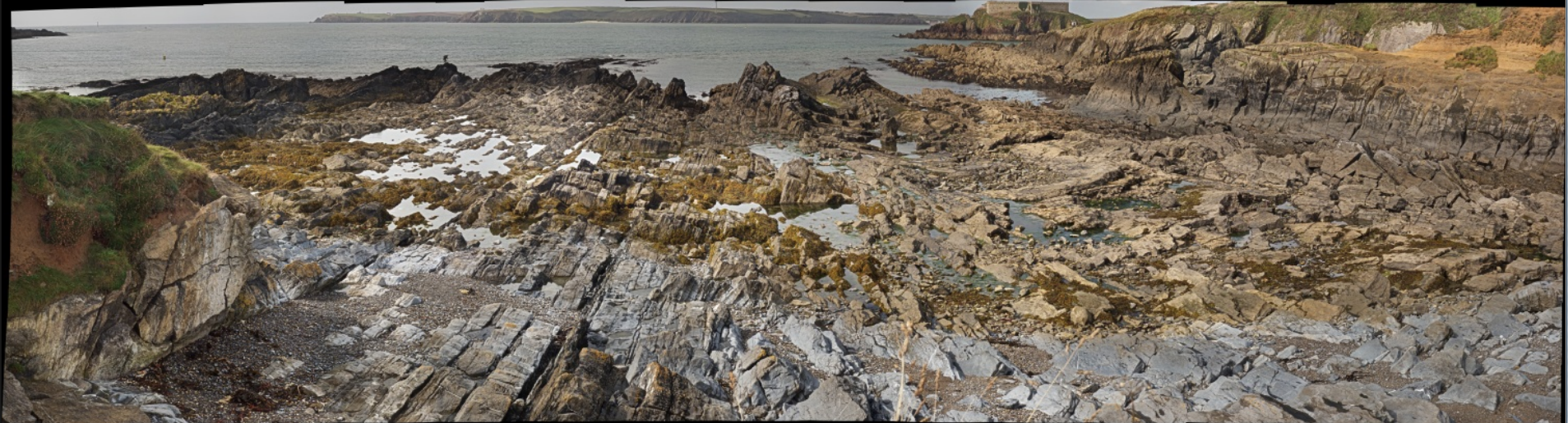
:......It
shows the foreshore at West Angle Bay, Pembrokeshire, Wales. The view
looks westwards towards Milford Haven and shows the Lower
Carboniferous Limestone contorted by a series of Variscan thrust
related folds. One of the thrust planes is seen in the left of the
image, over-steepened by the folding. To the centre of the image are a
pair of whaleback periclinal anticlines. The beds then steepen again
to vertical on the right via a tight syncline.
But the
beauty of a gigapan image is that one can dive in and view the detail
like the slickenside lineations on the thrust plane or the writing on
the buoy.
@-@-@-@-@-@-@-@-@-@-@-@-@-@-@-@-@-@-@-@-@-@-@-@-@-@-@-@-@-@-@-@-@-@-@-@-@-@-@-@-@-@-@
Garry float at
Geotripper
is still spectacular even though it is at a place that's been
photographed many a time. (I'm having trouble with his link so here it
is
http://geotripper.blogspot.com/2011/03/my-favorite-geologic-picture-oh-so-many.html
)
 Long
before I had a digital camera, I used a particular slide from a trip
in the 1980s to introduce my students to the idea of the fascination
of geology. It was taken next to one of the most famous photography
spots in our national park system, but it is not a picture of the
iconic feature. It's the trail leading to it. Delicate Arch of the "Real" Jurassic Park
lies just around the corner, and a crowd is often found there,
especially at sunset. But I see fewer people stop and consider this
scene....
Long
before I had a digital camera, I used a particular slide from a trip
in the 1980s to introduce my students to the idea of the fascination
of geology. It was taken next to one of the most famous photography
spots in our national park system, but it is not a picture of the
iconic feature. It's the trail leading to it. Delicate Arch of the "Real" Jurassic Park
lies just around the corner, and a crowd is often found there,
especially at sunset. But I see fewer people stop and consider this
scene....
I got into geology in part because of the wonderful
journey of imagination that it is; a geologist is a world traveler, and a
time traveler. The trail in this picture is formed on a natural
break in the rock. Why is the break there?
In Jurassic time 180 and 140 million years ago, tidal
flats and coastal sand dunes spread across this part of Utah. The
surfaces of the dunes were pathways for all kinds of creatures, from
insects to giant lumbering dinosaurs. The walked and crawled on these
sands, and later the surfaces were preserved by subsequent layers of
windblown sand. The surface later hardened a bit more than the others,
and millions of years later, erosion exposed the old sands. A fracture
developed along the surface, and the trail-builders of a few decades
ago found it a great deal easier to just remove the overlying rock
than to carve a new flat surface at great expense. And so it is that
during our brief sojourn on the planet, we walk on the same surface,
and perceive the significance of that fact. We use our minds to
explore strange alien worlds, and yet these are the worlds that
existed before ours and which became the raw materials for our own.
 Again,
practically everyone walks up to Delicate Arch, but there is another
arch just a few steps off the trail that provides a stunning view the
distant La Sal Mountains, the laccolithic cores of 25 million year old
volcanoes. This picture, taken just a few yards from the one above,
contains the four elements of ancient human thought: water, earth, fire
and sky (the water is in the sky and in the creek below). The essence
of earth science...
Again,
practically everyone walks up to Delicate Arch, but there is another
arch just a few steps off the trail that provides a stunning view the
distant La Sal Mountains, the laccolithic cores of 25 million year old
volcanoes. This picture, taken just a few yards from the one above,
contains the four elements of ancient human thought: water, earth, fire
and sky (the water is in the sky and in the creek below). The essence
of earth science...
@-@-@-@-@-@-@-@-@-@-@-@-@-@-@-@-@-@-@-@-@-@-@-@-@-@-@-@-@-@-@-@-@-@-@-@-@-@-@-@-@-@-@
Reynardo's float at
The Musings of the Midnight Fox has a very interesting one with this to be said about it....
 This one is from New Zealand. The Nile River Caves (as featured in WOGE #263)
are on the north-west side of South Island, New Zealand, and as well
as the expected beautiful limestone features, have some wonderful
glow-worms and some rather interesting strata.
This one is from New Zealand. The Nile River Caves (as featured in WOGE #263)
are on the north-west side of South Island, New Zealand, and as well
as the expected beautiful limestone features, have some wonderful
glow-worms and some rather interesting strata.
This one in particular is a mixture of mudstone and limestone. By the
time this layer emerges at the coast at Punukaki, it's more clearly
layered and makes the Pancake Rocks.
Yes, I have amazing glacier and volcano shots. But this one is the one that says "Geology" to me the loudest.
@-@-@-@-@-@-@-@-@-@-@-@-@-@-@-@-@-@-@-@-@-@-@-@-@-@-@-@-@-@-@-@-@-@-@-@-@-@-@-@-@-@-@
The float Elli has submitted at
Life in Plane Light has this amusing tale to tell...
For my PhD research, I ended up working in the Swiss Alps.
Day one out was long, long, long (and it was magically also my
birthday). By the time we reached the col that was going to actually
become my field area it was rather late in the day and we were still
1000 m above the closest road. Bridget (my field assistant) and I
were wearing every item of clothing that we had in our packs due to the
cold (there was still snow on the ground & it was July). Before
we could call it a day, we decided to collect four samples (we had a
number of other rocks from earlier at other sites to the south of the
col). Three popped out without an issue in reasonable sizes (enough
for thin sections, tomography, and bulk chemistry), but the fourth was
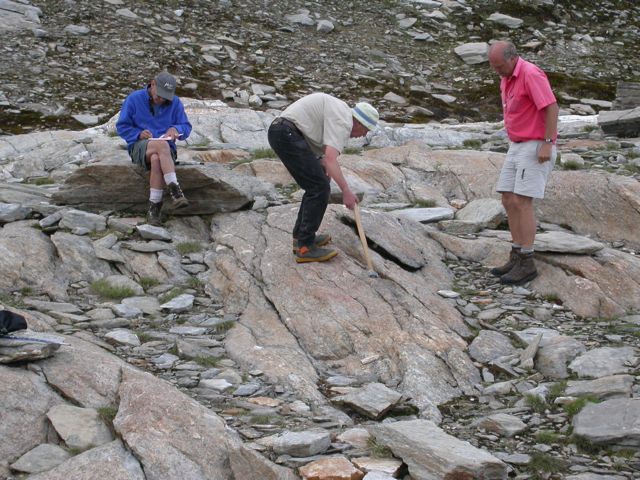
stubborn. It came off in a huge sheet:

- the large slab (behind the hammer) that
eventually became 04AD15; Tom Foster in blue, Hannes Hunziker in the
middle, and Lukas Baumgartner in pink
while
Bridge and I proceeded to shiver, these three male geologists tried
to get 04AD15 down to a reasonable size. They used the sledge.
They used a hammer with a chisel. They hopped up & down on the
slab. They wedged another rock underneath the slab and tried
everything again. Eventually, pieces started to fall of the edges.
In the end, 04AD15 is still my largest sample. But its also my best
sample of the bunch (including what I got a year later!), so all that
work was worth it. But whenever I look at anything related to the
sample, I have to imagine three senior geologists trying like crazy to
break the slab


04AD15 post-cutting

@-@-@-@-@-@-@-@-@-@-@-@-@-@-@-@-@-@-@-@-@-@-@-@-@-@-@-@-@-@-@-@-@-@-@-@-@-@-@-@-@-@-@
Michael with
Through the Sandglass has apiece of art as his geologic float
 The March edition of the Accretionary Wedge geoblog carnival is at Ann’s Musings,
and the theme is a deceptively simple summons: “Throw me your
‘favorite geologic picture’ mister.” This is nigh-on impossible and has
led to some considerable introspection, not to mention scrabbling
around to see what candidates I have with me on my laptop. But the
scrabbling stopped as soon as I reminded myself of the image above. At
first glance, perhaps it’s not strictly geological – but then again, yes it is. And, because of the very personal impact, it’s one of my favourite pictures – ever.
It’s
from a location in the remote south-western corner of Egypt, a Louvre
of rock-art. This is just a small exhibit in a cave shelter covered
in human expressions. The setting is geological, the canvas is
geological, and the materials are geological, and all combine in the
message of the connection between humans and geology. But of course
it’s even more than that – we have no idea really who the artists were,
exactly when they lived, what the function of this place was in
their society, or why they expressed themselves so exuberantly. But
the emotional resonance, sitting there gazing at this, has become
deeply ingrained; there is an immediate, intensely human, connection
with two unknown people who chose to record their hands reaching out
to each other.
It’s not even a picture of sand – but it
is probably my favourite geological photo. And, in today’s world,
perhaps it has an important message.
The March edition of the Accretionary Wedge geoblog carnival is at Ann’s Musings,
and the theme is a deceptively simple summons: “Throw me your
‘favorite geologic picture’ mister.” This is nigh-on impossible and has
led to some considerable introspection, not to mention scrabbling
around to see what candidates I have with me on my laptop. But the
scrabbling stopped as soon as I reminded myself of the image above. At
first glance, perhaps it’s not strictly geological – but then again, yes it is. And, because of the very personal impact, it’s one of my favourite pictures – ever.
It’s
from a location in the remote south-western corner of Egypt, a Louvre
of rock-art. This is just a small exhibit in a cave shelter covered
in human expressions. The setting is geological, the canvas is
geological, and the materials are geological, and all combine in the
message of the connection between humans and geology. But of course
it’s even more than that – we have no idea really who the artists were,
exactly when they lived, what the function of this place was in
their society, or why they expressed themselves so exuberantly. But
the emotional resonance, sitting there gazing at this, has become
deeply ingrained; there is an immediate, intensely human, connection
with two unknown people who chose to record their hands reaching out
to each other.
It’s not even a picture of sand – but it
is probably my favourite geological photo. And, in today’s world,
perhaps it has an important message.
@-@-@-@-@-@-@-@-@-@-@-@-@-@-@-@-@-@-@-@-@-@-@-@-@-@-@-@-@-@-@-@-@-@-@-@-@-@-@-@-@-@-@
Here's the
History of Geology interesting float by David.
(
I'm having trouble with this link so here it is
http://historyofgeology.blogspot.com/2011/03/accretionary-wedge-32-favourite-image.html
)
In a
first moment I couldn't decide what image to take, the classic
outcrop or the marvellous landscape? - but there is an elder picture of
2007 I really like, at a first glimpse it's geological context is not
obvious, but this is also a reason that I like this particular
picture.

The photo shows a species of club moss emerging from a pile of rubble. The club moss Huperzia selago
is one of the two species of this genus present in the Alps; this
species in particular can be found in high altitude and in glacier
forelands, acting as pioneer species.
This specimen was emerging from gneiss and schist debris covering an
active rock glacier; I like the contrast of the green plant to the cold
grey of the rocks forming a sort of picture frame, the impression
that the club moss overcomes every obstacle, even "breaks" the rocks
apart to emerge from the underground.
For plants creeping debris and permafrost represent an ulterior
challenge for colonization and growth in an already nasty environment,
with long snow cover, low temperatures and deadly UV-radiation. I
think the picture depicts well the struggle of existence in a harsh
environment - but as the the rocks act as obstacle they at the same
time also provide shelter, moisture and nutrients.
For the geologist also the recognition of even the smallest clue can be
helpful, I find it fascinating how many different methods can be
adopted to understand the development of a geomorphologic feature or a
landscape - in combination with classic geological methods for example
the vegetation cover or diversity can give indications of the recent
activity of rock glaciers, or help to reconstruct the temporal
development when other indicators are absent.
And finally the image remembers me as a sort of metaphor what the German geoscientist Gerd Lüttig argued in 1971:
"Earth history can be
described as a permanent interaction between the geosphere (lithos)
and life processes (bios). To investigate these processes is the
mission of Lithobiontics, a new research discipline between Geology and
Biology."
@-@-@-@-@-@-@-@-@-@-@-@-@-@-@-@-@-@-@-@-@-@-@-@-@-@-@-@-@-@-@-@-@-@-@-@-@-@-@-@-@-@-@
Here's Philips float at
Geology Blues
is not only spectacular to look at but is special to for the memories
it hold for him. (I'm having trouble with this link so here it is
http://geologyblues.blogspot.com/2011/03/favorite-geology-picture-aw32.html )
In a post about Multnomah Falls and Columnar Jointing,
I posted this picture taken of Sam at Devil's Tower a few years ago.
It remains one of my favorite pictures of geology (and Sam) as it
provides such a great image to show several geologic principles at
ones. Aside from the geologic signficance of the tower itself, the
promionant geologic feature is the massive hexagonal piece that 7-year
old Sam (for scale) is leaning against. Behind it, you can see the
joints extending up the tower with clear hexagonal blocking roofs,
allowing one to recognize the block as having weathered and fallen off
the tower.
The picture also has trees and shrubs growing in the
fractures below the main part of the tower. These fractures are not the
columnar jointing of above, and so demonstrate a different condition
of cooling for the base of the tower. The fractures below also have
trees and shrubs growing amids the fractures illustrating yet another
form of mechanical weathering.
@-@-@-@-@-@-@-@-@-@-@-@-@-@-@-@-@-@-@-@-@-@-@-@-@-@-@-@-@-@-@-@-@-@-@-@-@-@-@-@-@-@-@
The float at
Geology Happens has this wonderful panorama view.
(I'm having trouble with this link. http://geologyhappens.blogspot.com/2011/03/aw-32-favorite-images-anticline.html )
This
was taken from the appropriately named "Anticline Overlook" of the
Canyon Rims Recreation Area in eastern Utah. The anticline is obvious,
you can see the upward curve of the rock units. I love the part where
the river cuts through the anticline making a natural road cut.
The river cuts through the Permian age Cutler
formation, the left overs from the formation of the Ancestral Rockies.
The upward arching of these rocks is from the squishing (a very
technical term) of a buried salt layer. Far below the Cutler lies the
Pennsylvanian Paradox formation, a mile thick layer of salt that has a
tendency to move about creating some fun landscapes in the desert
southwest. The buildings and ponds you see in the picture are a potash
mine. Water is pumped underground into the Paradox layer, dissolves
the salts and the brine is pumped back to the surface into the blue
evaporation ponds in the background. The water evaporates away leaving
the salts for transport.
The fun part of this area are the roads. They
are barely visible in the picture but they travel hundreds of miles
through the red rock desert . A mountain biking heaven!

@-@-@-@-@-@-@-@-@-@-@-@-@-@-@-@-@-@-@-@-@-@-@-@-@-@-@-@-@-@-@-@-@-@-@-@-@-@-@-@-@-@-@
Cain at
Point Source has added this last entry to the parade of picture floats.
(I'm having trouble with this link so here it is http://cbdawson.com/blog/2011/03/aw32-arachnoids-on-venus-2/ )
In
the midst of reorganizing, I recently unearthed some deeply buried
personal geologic records from past research projects. One discovery
was an image that previously adorned my wall: a MagellanVenus. radar image of arachnoids on

Magellan radar image of arachnoids on Venus. (Image courtesy of NASA/JPL)
I think this image is a perfect fit for Accretionary Wedge #32 “favorite geologic picture.” It’s not the most colorful or dramatic image, but it holds an important place in my professional experience in the geosciences.
Arachnoids
are geological features on Venus. They are characterized by a
combination of radar-bright, concentric rings (like a bull’s eye) and
radiating lineations (line-like features) and were named “arachnoids”
because of their spider and web-like appearance.
Although these features had been identified on earlier Soviet Venera
mission data, the NASA Magellan mission provided sufficiently high
resolution radar imagery and elevation data to investigate them more
closely.
These features were one of my first forays into
geology research as an undergraduate student. What were they? Did all
features catalogued as arachnoids based on the radar images have
similar topographic features? What caused them? Where they all the same
age? Where were they located? Was there a terrestrial geology analog?
I had many questions, a patient research advisor, and a short summer.
The
personal outcome was clear, though: I was hooked. Geology was
fascinating, no matter where in the solar system. There were so many
questions, and we didn’t have all the answers! This was a far cry from
the textbook science of packaged information and rote facts to
memorize. The science was alive, the questions infinite, and the data
plentiful.
Whenever I see these data images, they represent all of this in one snapshot: the excitement and mystery of geology.
He has more but you just have to go to his blog to read the rest of it.
@-@-@-@-@-@-@-@-@-@-@-@-@-@-@-@-@-@-@-@-@-@-@-@-@-@-@-@-@-@-@-@-@-@-@-@-@-@-@-@-@-@-@
And finally here's the Captains float -
The Red River at sunrise, seen from a balloon about 1000 feet up in the air.
 |
| The Red River |
 |
| The beads are thrown and are now on the wire connecting to the internet web. I hope you had a good time. |
Now
all good things must come to an end. The parade is over and it is
time to go home. Thank you one and all for submitting something for
this Accretionary Wedge - 32.
If you had something and didn't get it in or if I missed it please leave a comment and I will add it later.
Post script:
Here's a little bit about Mardi Gras for those who don't celebrate it like we do in Louisiana.
For
those of you who don't know its officially Carnival time or Mardi
Gras season (Twelfth night to Fat Tuesday i.e. Jan 6 to March 8 this
year). Twelfth night is also know as the feast of the Epiphany and is
celebrated by Christians as the day the three wise men came to visit
the baby Jesus and is 12 days after Christmas. Fat Tuesday is the day
before Ash Wednesday. Ash Wednesday is the first day of lent, a
time where you are suppose to make sacrifices and give up things, in
preparation of Easter which is 40 days later. Because people may give
up drinking, certain foods etc for the forty days during lent they
like to have a big blow out where they consume the food that they will
be giving up. They usually do this the day before and thus the
reason it is called Fat Tuesday or as the French call it Mardi Gras.
To celebrate together different groups of people with like interests
get together and form Krewes. Most Krewes have a theme by which they
go by. For example, in my area of LA there is a Krewe of doctors call
Aesculapius and another one for Lawyers called Justinian and one of
cat and dog lovers called Barcus and Meow. I am a member of the
Krewe: Les Femmes Mystique. If you haven't guessed it - its a group
of women who are concerned about the community. Although we enjoy our
parties we also like to give something back to the community. Every
month we have a project to work on. This keeps the Krewe together
during the year when the parties are not going on. Every month there
is a different project, such as working at the food bank, help run the
Susan G Coleman race for cancer, the march of dimes walk, gathering
school supplies for children, getting and wrapping toys for the Toy's
for Tots program, etc. It varies from year to year what all we do.
But the thing that most people know the Krewes by are by their
parades. My Krewe is not big enough to have a parade of their own so
we augment other parades in the area by joining in on other floats in
the parades. When you are on a float, you provide all of your own
throws - the things you toss to people. People love to come and watch
these parades because of the gaudy decorations and the stuff that gets
tossed to them. Beads are the most common thing, but there are also
other things tossed to like stuff animals, wrapped candies/food,
plastic cups and fake coins called doubloons (which can become a
collectors item). It's whatever you want to buy and spend, but you are
restricted to things that can't hurt if tossed, also it can't be
offensive to the public in general.
If you ever go to a Mardi
Gras parade there are certain things you should know. Namely they
can't throw anything if the float is not moving, so don't try to stop a
float to get something from it. Also if it lands on the ground put
your foot on it and then after the float has gone by then reach down
and pick it up. If you try to reach down and grab it expect someone to
stomp on your hand. Also when the float goes by everyone says 'Throw
me something Mister'. The reason they do that is because the people
on the floats are usually in costumes, with their faces covered. They
cover their faces so they can remain anonymous.
Elaborate
costumes are common with the Carnival. Most Krewes have a King, and a
Queen and a Captain the rest of the float leaders are called Dukes
and Duchess. Because they are royalty they like to dress up to the
part, thus the elaborate costumes. These people hold their offices
for one year, and then switch off at coronation Bals. There is also
another bal that is thrown during the Carnival time where the other
royalties come together to enjoy the hospitably of the different
Krewes. The Captain of the Krewe organizes the bals and parade and is
the person who is in contact with the other Krewes. The King and
Queen are the official representatives of the Krewe for that year and
are expected to attend most events. The King and Queen are very
rarely married to each other. The spouse or significant other of the
Royalty person is officially named their consort.
Mardi
Gras is all about having fun and celebrating life. It is also about
giving back to the community in which they live as a ways for friends
and neighbors to get together so they can get to know each other
better. For more about Mardi Gras here Wikipedia
Mardi Gras.
Post Script:
I
do want to thank everyone. I did have some technical difficulties
with this but eventually figured things out. I do want to thank Callan
for helpful suggestions, while I tried to get it done. I must admit I
agreed to be a host more for my own benefit than yours. I've very
inept with computers and doing things like this teaches me so much. I
also do it so I can see all the amazing things that have developed in
the geology field since I was last active in it. I enjoyed putting this
blog together and it wouldn't have been possible if it wasn't for all
the contributions I got. Again THANK YOU.